
Stardew Valley Ancient Seed vs Ancient Seeds: Grow Your First Ancient Fruit
Tell the Ancient Seed artifact from plantable Ancient Seeds, unlock the Museum reward, and plan your first Ancient Fruit harvest.
Research note: Checked November 8, 2026 against the references below. This is a source-researched guide, not an independently playtested walkthrough. Scope: 1.6 mechanics, unmodded gameplay.
Quick answer
Ancient Seed is an artifact; Ancient Seeds is the plantable packet. Donate the artifact to the Museum, then claim the packet and crafting recipe from Gunther. The crop takes 28 days for its first harvest and regrows every 7 days. Artifact, plantable seeds.
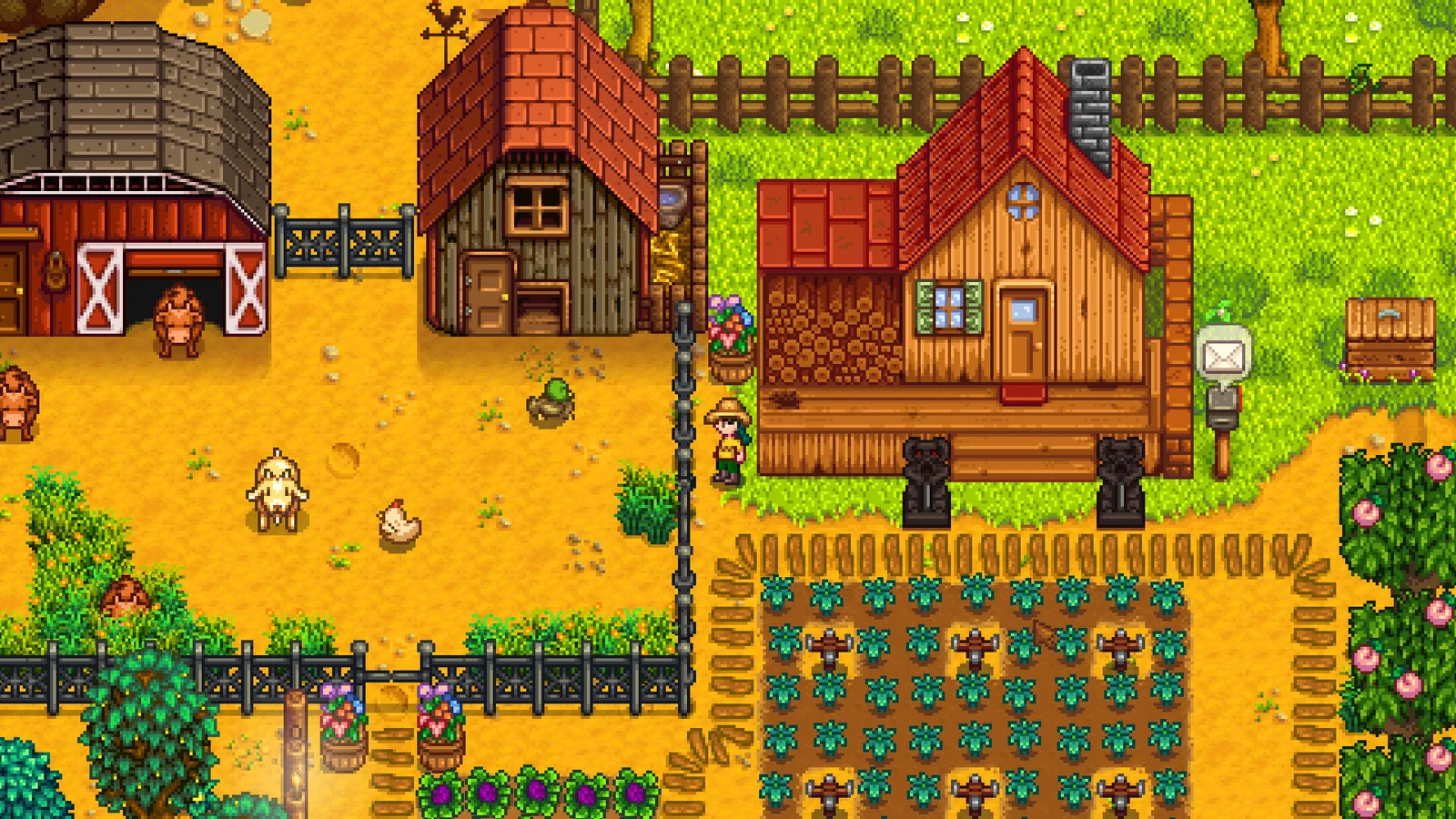
Cover credit: © ConcernedApe, official Stardew Valley Steam farm screenshot. It illustrates crop farming and does not identify the pictured plants as Ancient Fruit.
Find the artifact, then check the reward
The artifact reference lists Cindersap Forest and Mountain artifact spots, several insect enemies, fishing treasure and Artifact Troves among its sources. These are possible sources, not a guaranteed drop on a particular trip. Ancient Seed sources.
If you already have one, inspect its name before trying to plant it. An artifact in your bag does not behave like a seed packet. After donation, check the Museum reward collection rather than assuming the plantable item automatically appeared in your inventory.
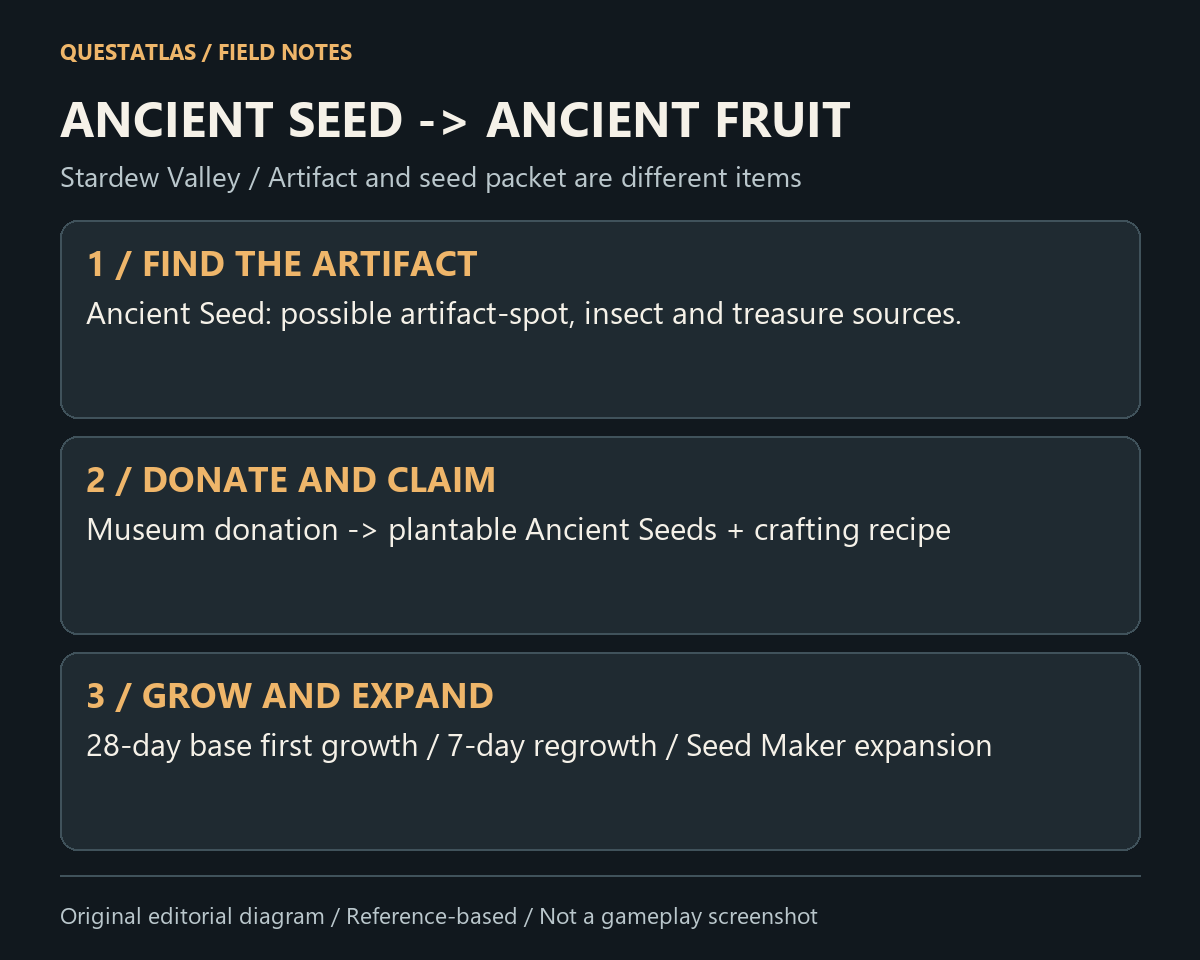
Diagram: Original QuestAtlas item-progression summary, not a screenshot of a drop location.
Choose where the first plant will live
Plantable Ancient Seeds grow outside in spring, summer and fall, can grow in the greenhouse, and cannot be planted in Garden Pots. The seed reference also records that they stopped being sold by the Traveling Cart in 1.6.3, so older shopping advice may not apply. Planting restrictions and history.
Before spending your first packet, decide whether your aim is one harvest, a continuing outdoor planting or a protected expansion plan. Count the full first-growth period rather than budgeting only the later seven-day interval. Faster growth effects and an individual save's conditions can change calendar planning; the numbers here are the base schedule.
Expand with a Seed Maker
A Seed Maker can process Ancient Fruit into more packets. The normal output is variable rather than a guaranteed two seeds. Its crafting recipe unlocks at Farming level 9 and uses 25 Wood, 1 Gold Bar and 10 Coal. The listed processing time is 20 in-game minutes. Seed Maker rules.
An expansion-first plan reinvests some fruit into seeds; a cash-first plan sells or processes more of the harvest. Neither objective is automatically correct. Keep a small packet reserve before comparing machine income so an accidental sale does not interrupt the planting plan.
Why the first harvest feels slow
The initial 28-day growth period is different from the seven-day regrowth interval. A packet planted today does not produce fruit one week later under base conditions. Check watering, the item name and the first-growth calendar before concluding that the crop is broken.
For permanent irrigation, use the greenhouse sprinkler diagram.
After seed expansion: compare the harvest fairly
Reserve the fruit you want to reinvest into seeds, then compare the surplus using equal input counts. The Ancient Fruit Wine versus Dehydrator guide compares five bottles with one five-fruit dried batch, including Artisan values and a machine-backlog example.
Sources and version notes
Recipe panels in your installed build take priority if a later update or mod changes these values. Send a correction.