
Stardew Valley Ancient Fruit: Wine vs Dehydrator
Compare Ancient Fruit Wine with one five-fruit dried batch, including Artisan prices and the trade-off between sale value and machine backlog.
Research and calculation note: Checked November 8, 2026. AI-assisted reference research with independently recomputed sale-value examples. Scope: unmodded Stardew Valley 1.6 mechanics. The arithmetic is checked; these are not measurements from our own farm save.
Quick answer
Ancient Fruit Wine earns more per fruit; a Dehydrator clears five-fruit batches faster. Compare the same amount of fruit before choosing: without Artisan, five Ancient Fruit become five unaged wines worth 8,250g in total, or one dried batch worth 4,150g. One dried product is not the equivalent of one bottle.
The useful question is whether your bottleneck is fruit, available Kegs, or how soon you need the sale. This guide compares output value and queue size separately so a larger number on a single dried product does not mislead the decision.
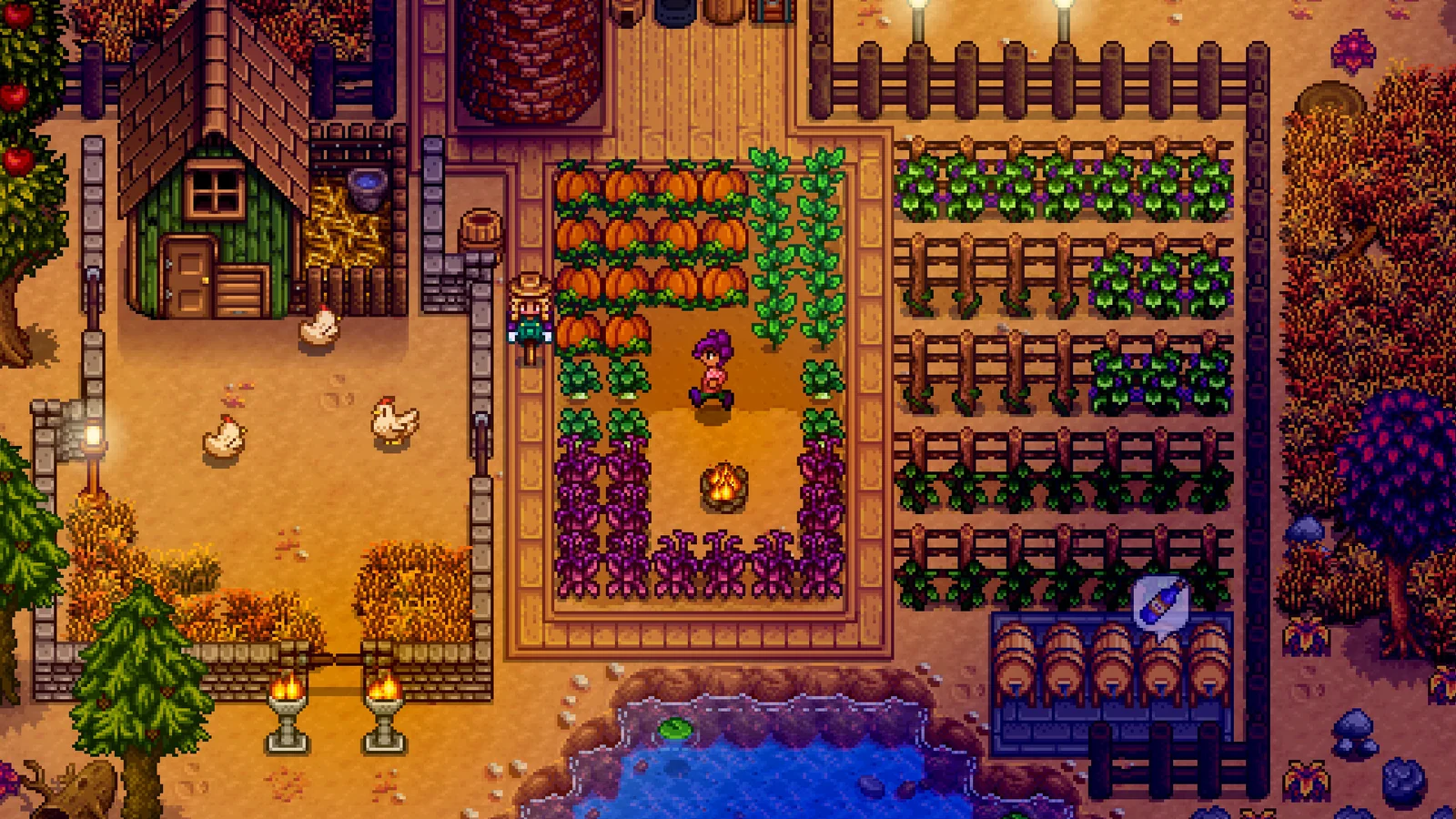
Cover credit: © ConcernedApe, official Stardew Valley Steam farm screenshot with processing equipment. It provides artisan-farm context; the pictured machines are not identified as Dehydrators.
Compare five fruit with five fruit
The reference base price of Ancient Fruit is 550g. Wine uses one fruit and sells for three times its base price before quality aging or professions. Ordinary Dried Fruit uses five fruit and sells for 7.5 times base price plus 25g. Ancient Fruit values, Wine rules, Dried Fruit rules.
- Sell five normal fruit raw: 5 × 550 = 2,750g.
- Make five unaged wines: 5 × 1,650 = 8,250g.
- Make one dried batch: 7.5 × 550 + 25 = 4,150g.
- Wine adds 5,500g over that raw sale; drying adds 1,400g.
- For those same five fruit, wine returns 4,100g more than drying, before setup costs and time.
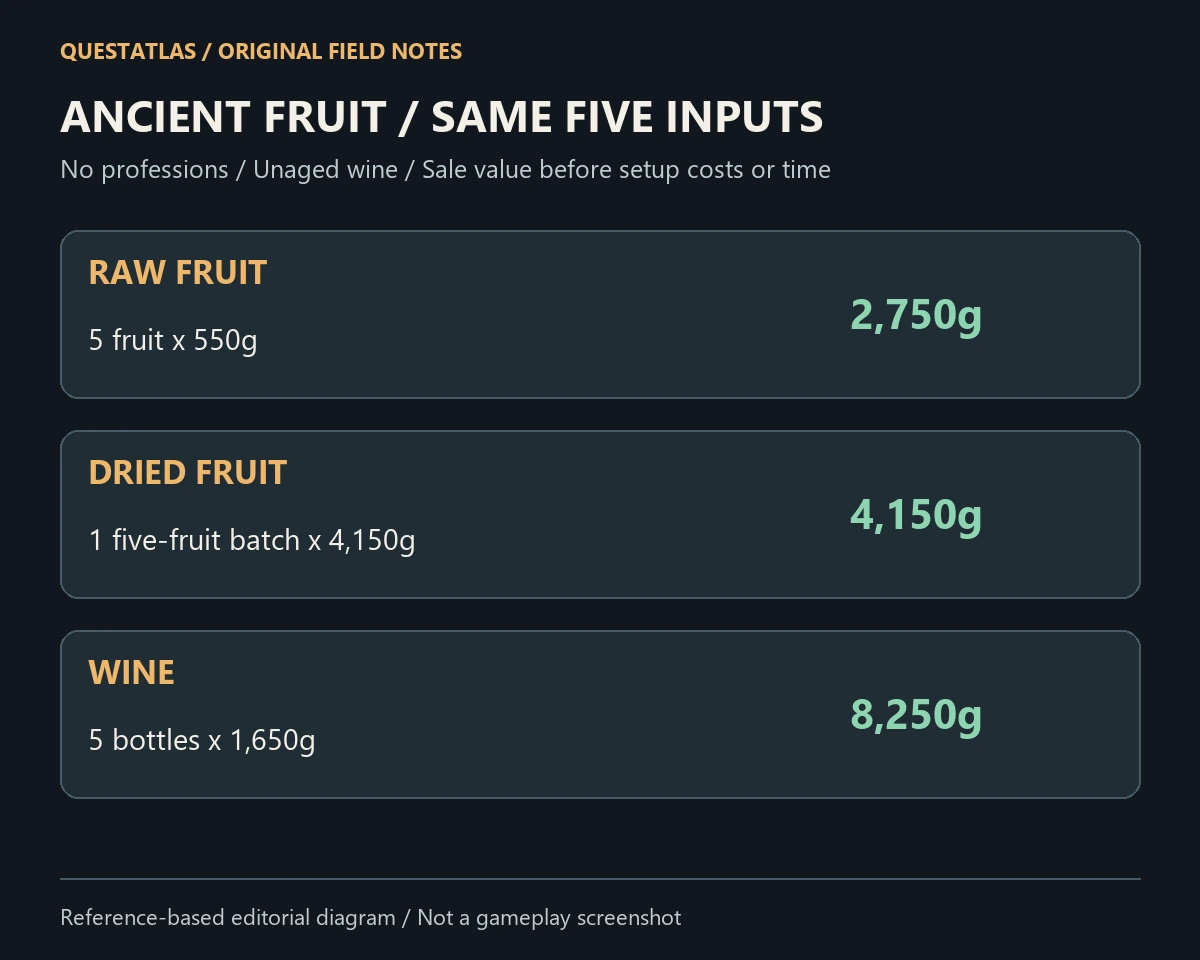
Independent calculation: The five-fruit normalization and differences above are our arithmetic using the cited prices. They measure eventual sale proceeds, not daily profit, player labor or the value of a machine tile.
What Artisan changes
With Artisan, the cited unaged wine value is 2,310g per bottle and dried Ancient Fruit is 5,810g per five-fruit batch. Five wines therefore total 11,550g, which is 5,740g more than one dried batch from the same five fruit.
Use the actual raw sale for your quality and professions when comparing processing with selling raw. A Tiller-adjusted raw stack is a different baseline from the 2,750g no-profession example. Artisan does not change the fact that the dried product consumes five inputs.
More value per fruit versus a shorter queue
The Wine reference lists 10,000 in-game minutes, approximately seven days, for one Keg cycle; dried fruit is described as a next-day batch. These are game-system reference timings, not a stopwatch result from this website. Wine processing, Dehydrator processing.
For a concrete queue-size example, suppose you have 100 fruit and ten Kegs. Wine requires 100 single-fruit batches, or ten loading waves across those ten machines. Drying requires 20 five-fruit batches; with ten Dehydrators that is two loading waves. This compares equal machine counts, not equal construction costs or identical completion times.
If fruit is scarce and you can wait, the higher eventual value per fruit matters. If your crop chest keeps growing while every Keg is occupied, processing surplus elsewhere can trade some eventual value for a shorter queue. Reserve fruit you need for seed expansion before choosing either route.
Reproduce the decision in the batch calculator
Open our artisan batch profit calculator and run two comparisons with inventory 100 and machines 10:
- Wine, no professions: raw 550, inputs per batch 1, batch output sale 1,650, batch cost 0.
- Drying, no professions: raw 550, inputs per batch 5, batch output sale 4,150, batch cost 0.
The expected sale totals are 165,000g and 83,000g, compared with 55,000g raw. Enter the setup cost you actually want to recover separately. The calculator displays loading waves; it does not convert them to elapsed days or optimize a whole farm.
Do not mix fruit quality with aged wine quality
Our examples use unaged output. Higher-quality raw fruit changes the sale you give up; cask aging is an additional decision after wine production. Do not compare an aged-wine price with the normal dried batch and call the extra aging time free. Check the actual quality and profession-adjusted prices before entering them.
For the growing side of the plan, use the Ancient Seeds guide and greenhouse planner. For machine requirements and eligible inputs, see the Dehydrator recipe guide.
Sources and limits
- Ancient Fruit: base and artisan values
- Wine: one-fruit input, processing and aging
- Dried Fruit: five-fruit value formula
- Dehydrator: input and processing rules
Machine construction, seed cost, farm space and active play time are outside the sale-value examples. Mods or later patches may change the inputs; use your installed recipe and prices, and report any mismatch.